
If you're a homeowner in Central Maine, you already know what winter heating bills look like. Between oil, propane, and electric costs, keeping your home warm from November through April can easily run into thousands of dollars. The good news? The single most effective way to reduce those costs isn't a new furnace or heat pump — it's upgrading your home's insulation and sealing the air leaks that let your heated air escape.
At Nason's Home Solutions, we help homeowners across the Bangor area turn drafty, expensive houses into comfortable, efficient ones. Here's why insulation and air sealing should be at the top of your home improvement list.
The Hidden Problem: Air Leaks
Most homeowners focus on their heating system when they think about energy efficiency. But even the best furnace can't keep up if your home is leaking air. Common trouble spots include attic hatches, recessed lights, plumbing penetrations, electrical outlets on exterior walls, and gaps around windows and doors.
Our air sealing service targets these hidden leaks using professional-grade materials and diagnostic tools. We start with a thorough assessment of your home to identify exactly where air is escaping, then seal every gap systematically. The result? Your heating system works less, your home stays warmer, and your heating bills drop.
Insulation: Your Home's Thermal Barrier
Even with air leaks sealed, inadequate insulation means heat transfers right through your walls, attic floor, and basement ceiling. Many older Maine homes were built with minimal insulation by today's standards, and what's there may have settled, compressed, or deteriorated over the decades.
Our insulation services include spray foam, blown-in cellulose, and fiberglass options depending on your home's needs and budget. Spray foam is particularly effective because it insulates and air seals simultaneously, creating a continuous thermal barrier that dramatically reduces heat loss.
Don't Forget Your Basement and Crawlspace
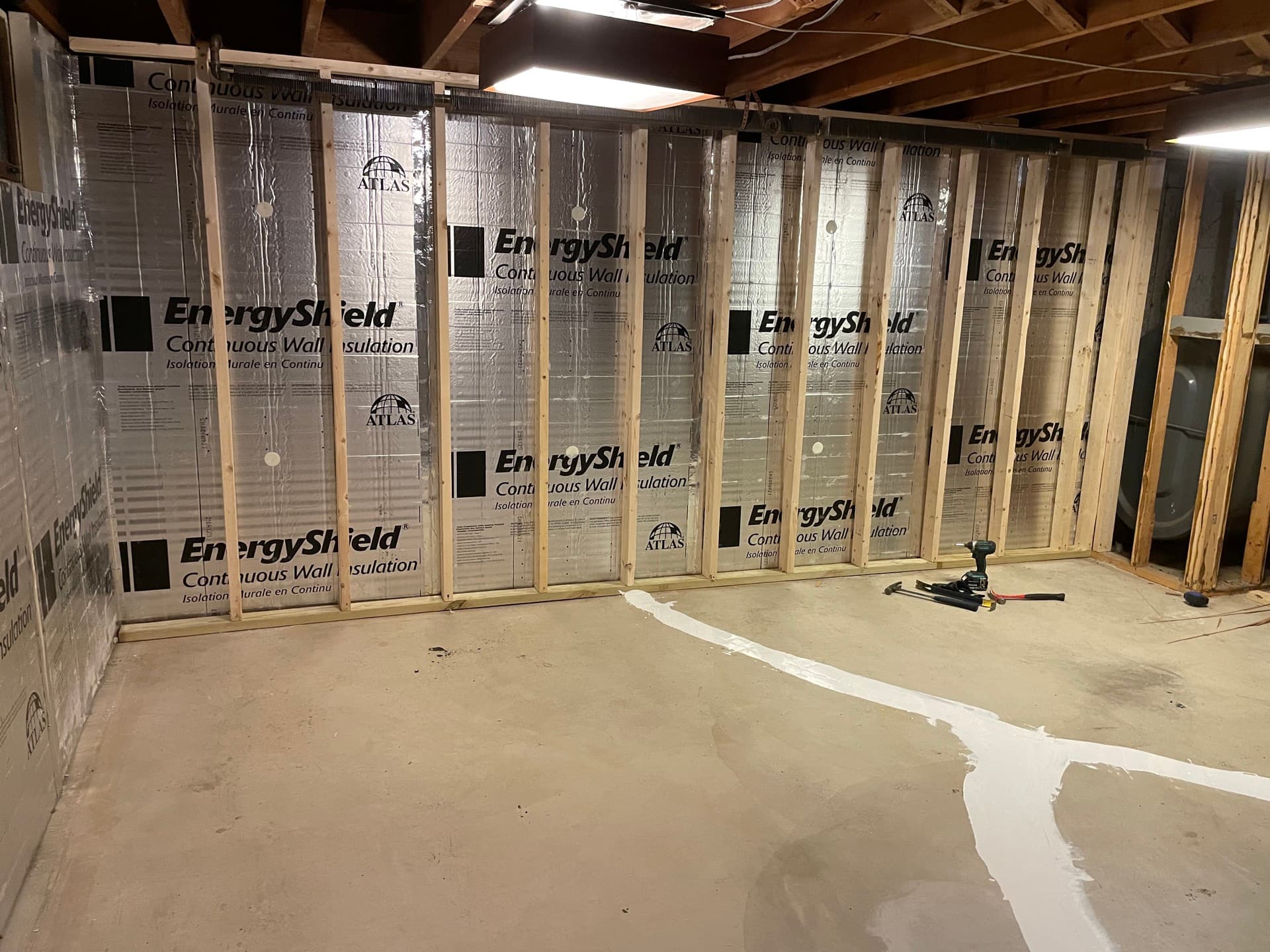
Your basement and crawlspace are often the biggest sources of energy loss and moisture problems in a Maine home. Bare foundation walls lose heat to cold soil and outside air all winter long. Cold floors, damp air, and musty odors are all signs that your below-grade spaces need attention.
Crawlspace encapsulation seals your crawlspace from ground moisture and outside air, creating a clean, dry, conditioned space that improves your home's comfort and air quality. For basements, our waterproofing solutions address water intrusion at its source, protecting your home's foundation and creating a healthier living environment.
The Mold Connection
Poor insulation and air sealing don't just waste energy — they create the conditions for mold growth. When warm, humid indoor air meets cold surfaces (like an under-insulated exterior wall), condensation forms. Over time, that moisture feeds mold and mildew, which can damage your home's structure and affect your family's health.
If you've noticed musty smells, visible mold, or unexplained allergic symptoms, you may have a moisture problem that's directly related to insulation deficiencies. Our mold removal service is performed by IICRC-certified technicians who not only eliminate existing mold but help identify and correct the underlying moisture issues that caused it.
Efficiency Maine Rebates: Up to $8,000 Back
Here's where the investment gets even smarter. Efficiency Maine offers substantial rebates for insulation and air sealing projects — up to $8,000 for income-eligible homeowners. Even at the standard tier, rebates of $4,000 are available for qualifying upgrades.
An energy audit is a smart first step. Our BPI-certified team performs comprehensive energy assessments that identify the most impactful upgrades for your specific home, so rebate dollars go where they do the most good.
How the Efficiency Maine Rebate Process Works
Efficiency Maine's insulation and air sealing rebates have a few rules worth knowing before you start:
- A registered vendor must do the work — Rebates only apply when insulation and air sealing are installed by an Efficiency Maine Residential Registered Vendor, and the work has to meet the program's Weatherization Requirements Checklist.
- Your income tier sets the rebate — There is an any-income tier, a moderate-income tier (Efficiency Maine verifies adjusted gross income), and a low-income tier, which is typically documented through participation in programs such as HEAP, SNAP, TANF or MaineCare.
- The rebate arrives by check — Efficiency Maine asks homeowners to allow about six weeks for processing after the project is submitted.
What a Blower Door Test Actually Measures
During an energy audit, a large calibrated fan is fitted into an exterior doorway and used to pull air out of the house. That lowers the indoor air pressure, so outside air rushes in through every crack, bypass and gap. The fan's reading tells the auditor how leaky the house is as a whole, and a thermal (infrared) camera shows where the cold air is coming in — often around attic hatches, chimneys, plumbing stacks and recessed lights. Efficiency Maine also notes that auditors can test boilers and furnaces for combustion safety, which matters because a much tighter house changes how heating equipment draws air.
Testing before and after the work is what turns air sealing from guesswork into something you can measure.
Stack Effect, Attic Bypasses and Ice Dams
In winter, warm air rises and pushes out through the top of your house, while cold air is pulled in low, through the basement, sill plates and crawlspace. Most of that upward flow escapes through attic bypasses: the chases, wire holes, plumbing vents, chimney gaps and light fixtures that connect your living space to the attic. Insulation piled on top of those holes does little, because warm air passes straight through it.
That escaping heat warms the roof deck and melts snow, and the water refreezes at the cold eaves. Building Science Corporation's guidance on ice dams puts air sealing the ceiling first, followed by enough attic insulation and roof ventilation. Efficiency Maine likewise notes that weatherizing a home can eliminate ice dams. The same warm, moist air that melts snow can also condense on cold roof sheathing, which is why attic mold and ice dams often show up together — see our guide to mold in Maine homes.
The same physics that pulls cold air up from below is why the floor level matters as much as the attic. If your first floor sits over a vented crawlspace, read our crawlspace warning signs before you plan the work. Whether your home is in Hermon, Bangor or Brewer, a blower door test is the clearest way to know where to spend first.
The Basement Finishing Bonus
Many homeowners who start with insulation and waterproofing end up discovering they have usable space they never considered. Once your basement is dry, insulated, and properly sealed, basement finishing becomes a practical option that adds living space and home value without the cost of an addition.
What to Expect from the Process
Every project starts with a free assessment. We visit your home, evaluate your current insulation and air sealing, identify problem areas, and provide a clear estimate with no hidden fees. If rebates apply, we help you navigate the paperwork so you get every dollar you're entitled to.
How long a project takes depends on the scope of work, and you get a schedule with your written estimate. We take care to protect your home during the process, clean up thoroughly, and walk you through the completed work so you can see exactly what was done.
Real Results for Maine Homeowners
For homes in Bangor, Hampden, Old Town, Orono, Brewer and across Central Maine, the payoff of insulation and air sealing is easy to feel: warmer floors in winter, more even temperatures throughout the house, lower heating bills, and a home that just feels better.
That's not marketing — it's physics. When you stop losing heat through your walls, attic, and basement, your home holds its temperature the way it was designed to. Your heating system runs less, you use less fuel, and you spend less money. It's that straightforward.
Questions Homeowners Ask
Should I air seal or insulate first?
Air seal first. Once insulation covers the attic floor, gaps around wiring, plumbing stacks and chimneys are buried and much harder to reach. Sealing those bypasses before adding insulation lets the insulation do its job.
Can a house become too airtight?
It can. Efficiency Maine notes that in extreme cases air sealing can make a home tight enough to need a ventilation system or make-up air for heating equipment. A blower door test before and after the work shows where your house stands.
Do I have to use a registered vendor to get an Efficiency Maine rebate?
Yes. The insulation and air sealing rebates apply only to work installed by an Efficiency Maine Residential Registered Vendor that meets the program's weatherization requirements.
Ready to Get Started?
If your Maine home is drafty, expensive to heat, or showing signs of moisture problems, insulation and air sealing are the smartest investments you can make. Learn more about our team and our BPI and IICRC certifications, check out our frequently asked questions, or contact us to schedule your free assessment. You can also call us directly at (207) 291-6558.